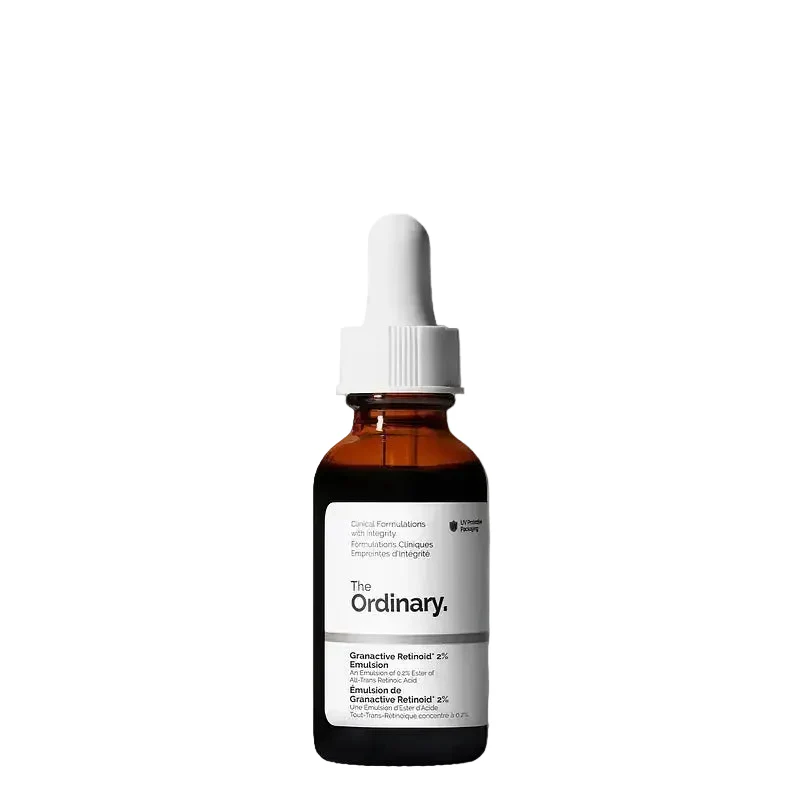
Retinol 1% In Squalane
A water-free, high-strength retinol serum formulated with 1% pure retinol in a nourishing squalane base. Designed for experienced retinol users, this expert-level formula targets fine lines, photo-damage, uneven texture, and general signs of skin aging — all at an accessible price point.
✨ Texture & Feel
1% Pure Retinol Concentration
The highest retinol strength in The Ordinary's range. Clinically proven to stimulate collagen production, increase cell turnover, and visibly reduce fine lines and wrinkles over time.
Squalane-Based Vehicle
Retinol is dissolved in squalane — a biomimetic moisturizer that cushions the barrier, reduces transepidermal water loss, and minimizes the drying side-effects common with high-strength retinoids.
Antioxidant Protection Complex
Tomato fruit extract (lycopene), rosemary leaf extract (rosmarinic acid), and Hydroxymethoxyphenyl Decanone neutralize free radicals and help stabilize the retinol molecule from oxidative degradation.
Ultra-Clean Formula
Only 8 ingredients. Free from parabens, sulfates, silicones, mineral oil, phthalates, synthetic fragrance, and artificial colorants. Vegan and cruelty-free.
Exceptional Value
At around $9–$10 for 30 ml, this delivers pharmaceutical-grade retinol concentration at a fraction of the price of prestige competitors — without compromising on efficacy.
Night-Time Resurfacing
Formulated for exclusive evening use. Retinol works in synergy with the skin's natural overnight renewal cycle, accelerating cell turnover while you sleep for smoother, clearer skin by morning.
🛡️ Safety & Compatibility
Retinol (vitamin A) is a retinoid. All retinoids — including over-the-counter retinol — are contraindicated during pregnancy and breastfeeding due to the theoretical risk of teratogenicity. Avoid completely if pregnant or nursing. Consult your doctor for safe alternatives like bakuchiol.
The formula contains no ferments, polysorbates, or problematic esters. Squalane is generally FA-safe, especially if derived from sugarcane. Caprylic/Capric Triglyceride (C8/C10) is FA-safe. *The squalane source is not publicly disclosed by The Ordinary — contact the brand if you have active fungal acne concerns.
Squalane scores 0 on the comedogenic scale, Caprylic/Capric Triglyceride scores 1, and Jojoba Oil is a non-comedogenic wax ester (0–2). Overall, this formula is extremely unlikely to clog pores for most users.
Retinol increases photosensitivity. Always apply SPF 30+ broad-spectrum sunscreen during the day when using this product. Use exclusively at night and avoid prolonged unprotected sun exposure.
At 1% strength, expect 2–4 weeks of potential dryness, flaking, and mild irritation as skin adapts. Start with 1–2 applications per week and gradually increase frequency. The "sandwich method" (apply between two layers of moisturizer) can reduce irritation.
Avoid using in the same routine as: other retinoids or retinoic acid, direct acids (AHAs/BHAs like glycolic or salicylic acid), benzoyl peroxide, and vitamin C (ascorbic acid). These combinations increase irritation risk significantly.
Pairs well with: hyaluronic acid serums (applied first, while skin is damp), niacinamide (applied at separate times), peptides (morning routine), gentle ceramide moisturizers, and SPF. Niacinamide and peptides can help reinforce the barrier on nights you don't use retinol.
This 1% concentration is The Ordinary's highest-strength retinol and is recommended for those who have already built tolerance with lower concentrations (0.2% → 0.5%). First-time retinol users should start with Retinol 0.2% in Squalane.
🔬 Ingredient Breakdown
💧 Squalane Primary Base Proven
The #1 ingredient and primary vehicle for this formula. Squalane is a stable, saturated hydrocarbon derived from either sugarcane or olive oil. It is chemically identical to squalene produced naturally in human sebum, making it exceptionally biocompatible. Unlike true oils, it is not a triglyceride — it contains no fatty acids and is purely carbon and hydrogen.
- Function: Emollient, moisturizer, skin-conditioning agent, retinol solubilizer
- Comedogenicity: 0/5 — universally considered non-comedogenic
- Skin benefits: Reduces transepidermal water loss (TEWL), softens and smooths skin, acts as an antioxidant against lipid peroxidation
- Science: Research confirms squalane is non-irritating even at 100% concentration; it does not disrupt the skin microbiome and is safe for all skin types including acne-prone and rosacea-prone
- FA note: Sugarcane-derived squalane is FA-safe; olive-derived may contain trace impurities. Source undisclosed by The Ordinary.
🥥 Caprylic/Capric Triglyceride High Proven
A light-textured ester derived from coconut oil and glycerin. It is odorless, colorless, and acts as an excellent emollient and solubilizer. It helps dissolve retinol evenly throughout the formula, ensuring consistent delivery with each drop.
- Function: Emollient, solubilizer, texture enhancer
- Comedogenicity: 1/5 — very low risk
- Science: Composed of C8 (caprylic) and C10 (capric) fatty acids — short-chain fatty acids that are not associated with Malassezia overgrowth, making it FA-safe
- Skin feel: Creates a smooth, non-greasy glide that makes application precise and comfortable
🌵 Simmondsia Chinensis (Jojoba) Seed Oil Low–Moderate Proven
Jojoba oil is technically not an oil — it is a liquid wax ester. Its molecular structure closely mimics human sebum, which makes it exceptionally well-tolerated and skin-compatible. It provides additional skin conditioning and contains naturally occurring Vitamin E (tocopherol), a potent antioxidant that also helps stabilize the retinol in the formula.
- Function: Emollient, skin-conditioning, antioxidant (vitamin E content)
- Comedogenicity: 0–2/5 depending on the reference; generally considered low-risk
- FA safety: As a wax ester (not a triglyceride with long-chain fatty acids), jojoba is considered FA-safe by most FA-safety resources
- Bonus: Jojoba's antibacterial properties may provide mild support for acne-prone skin
🧬 Retinol 1.0% Proven
The gold-standard OTC vitamin A derivative. Retinol is two conversion steps away from retinoic acid (tretinoin) — the prescription-strength active form. Once absorbed, skin enzymes convert retinol → retinaldehyde → retinoic acid. At 1%, this is The Ordinary's highest-strength retinol and is classified as "high strength / very high irritation potential."
- Anti-aging: Clinically proven to stimulate collagen and elastin synthesis, reduce depth and appearance of fine lines and wrinkles, and improve overall skin firmness
- Cell turnover: Accelerates epidermal renewal, improving skin texture, tone, and clarity — and reducing the appearance of pores, dark spots, and post-acne marks
- Acne: Normalizes keratinization and regulates sebum production; effective for comedonal and inflammatory acne (though not a licensed acne treatment)
- Science: Multiple randomized controlled trials confirm retinol's efficacy for skin aging at concentrations from 0.1%–1%, with 1% providing maximum OTC benefit
- Potency: Retinol is estimated to be 10–20x less potent than retinoic acid per mole, requiring skin conversion
🍅 Solanum Lycopersicum (Tomato) Fruit Extract Low Promising
Tomato fruit extract is rich in lycopene, one of the most potent carotenoid antioxidants found in nature. It helps neutralize free radicals generated by UV exposure and environmental stressors, providing a protective layer of antioxidant defense to complement retinol's resurfacing action.
- Function: Antioxidant, free radical scavenger, skin-conditioning
- Key active: Lycopene — shown in studies to reduce UV-induced skin damage and protect against photoaging
- Synergy: Works alongside retinol to combat oxidative stress, helping to preserve the formula's stability and skin's lipid integrity
🌿 Rosmarinus Officinalis (Rosemary) Leaf Extract Low Promising
Rosemary leaf extract is a well-researched botanical antioxidant and antimicrobial. Its primary active, rosmarinic acid, is a potent polyphenol with anti-inflammatory and antioxidant properties. It also has mild antibacterial and astringent effects that may benefit oily and acne-prone skin.
- Function: Antioxidant, antimicrobial, soothing, astringent
- Key actives: Rosmarinic acid, carnosic acid, flavonoids, diterpenes
- Research: Studies show rosemary extract suppresses Propionibacterium acnes (C. acnes)-induced inflammation
🌾 Hydroxymethoxyphenyl Decanone Low Promising
A nature-identical synthetic molecule that replicates a phyto-active compound found in grains of paradise (Aframomum melegueta), a spice from the ginger family. It is described as a 4-in-1 active with potent antioxidant, anti-inflammatory, skin-brightening, and soothing properties.
- Function: Antioxidant, anti-inflammatory, skin tone-evening, soothing
- Claims: May reduce the appearance of redness and support a more even, brighter complexion over time
- Stability: As a synthetic analogue, it offers greater formulation stability than plant-derived equivalents
🔒 BHT (Butylated Hydroxytoluene) Trace Proven
BHT is a synthetic antioxidant used as a preservative to prevent oxidation of the oils and retinol in this formula. Without it, the oils would go rancid and the retinol would degrade rapidly. It is used at very low concentrations considered safe by regulatory standards.
- Function: Antioxidant preservative, formula stabilizer
- Safety: Approved by EU and US cosmetic regulatory agencies at concentrations up to 0.8%; used here at well below that threshold
- Note: Some consumers prefer to avoid BHT; however, at trace cosmetic concentrations, the evidence for harm is not established
8 ingredients
Squalane, Caprylic/Capric Triglyceride, Simmondsia Chinensis (Jojoba) Seed Oil, Retinol (1.0%), Solanum Lycopersicum (Tomato) Fruit Extract, Rosmarinus Officinalis (Rosemary) Leaf Extract, Hydroxymethoxyphenyl Decanone, BHT
🔄 Where It Fits in Your Routine
🌙 PM use only · Apply after water-based serums but before heavier creams and face oils · Always follow with SPF 30+ in the morning
📝 How to Use
Start Slowly — 1–2 Nights Per Week
If new to this product or retinol at 1% strength, begin with once or twice weekly application only. Gradually increase frequency over 4–8 weeks as skin builds tolerance. Jumping straight to nightly use at 1% is the most common cause of irritation and "retinol uglies."
Cleanse & Tone First
Apply to clean, dry skin after cleansing and any water-based toners or essences. Ensure skin is completely dry before applying — damp skin can increase retinol penetration and irritation risk, especially for sensitive users.
Apply 2–3 Drops to Face & Neck
Dispense 2–3 drops onto fingertips and gently press and pat into face and neck. Avoid the immediate eye contour and corners of the mouth where skin is thinnest. Do not apply to broken, irritated, or sunburned skin.
Wait 1–2 Minutes Before Layering
Allow the serum to absorb before applying your next product. Layering too quickly over a wet oil serum can dilute its concentration and affect adhesion of subsequent products.
Seal with a Nourishing Moisturizer
Follow immediately with a rich, barrier-supporting moisturizer containing ceramides, peptides, or hyaluronic acid. This "sandwiching" technique locks in hydration and significantly reduces dryness, flaking, and irritation — especially important for beginners or sensitive skin types.
Apply Broad-Spectrum SPF 30+ Every Morning
Retinol increases photosensitivity. Daily sunscreen is non-negotiable when using this product — even on cloudy days. Without SPF, you risk UV-induced damage that will counteract the anti-aging benefits of retinol.
Refrigerate After Opening
The Ordinary instructs users to refrigerate this product after opening and use within 3 months. Cold storage significantly slows retinol oxidation, preserving potency and preventing the formula from turning yellow/orange (a sign of retinol degradation).
👤 Who Is It For?
✅ Perfect for you if:
- You have already used retinol at 0.5% or lower and want to step up
- You are targeting fine lines, deep wrinkles, or significant photo-damage
- You have oily-to-normal skin with good barrier function
- You want the maximum OTC retinol efficacy at a budget price
- You are committed to nightly SPF and a consistent PM routine
- You prefer a minimal, clean, fragrance-free formula
- You have concerns about post-inflammatory hyperpigmentation or acne scarring
❌ Consider alternatives if:
- You are pregnant or breastfeeding (use bakuchiol instead)
- You are new to retinol — start with 0.2% or Granactive Retinoid
- You have very sensitive, reactive, or rosacea-prone skin
- You have an active skin condition, eczema flare, or broken skin barrier
- You cannot commit to daily SPF use
- You want immediate results — retinol requires consistent use over 8–12 weeks
- You prefer a less-potent retinoid technology with lower irritation risk (consider Granactive Retinoid 5% in Squalane)
🎯 Skin Type Compatibility
Squalane is non-comedogenic and biomimetic. Retinol regulates sebum production and normalizes keratinization, directly addressing the root causes of oiliness and enlarged pores. The oil-based vehicle absorbs well without adding greasiness.
The squalane base provides meaningful hydration and reduces the drying side effects of retinol. However, dry skin types should be especially diligent about sealing with a rich moisturizer after application. Starting with 1x per week is advisable.
Highly suitable for combination skin. The lightweight, oil-balanced formula works well across T-zones and drier areas. Retinol's oil-regulating properties benefit oily zones while squalane nourishes drier areas.
The 1% concentration is high and may be too potent for reactive or sensitive skin. Patch test before use, start at 1x per week, use the moisturizer-sandwich method, and consider The Ordinary's Granactive Retinoid or 0.2% option as a gentler entry point.
Retinol normalizes sebaceous gland activity and prevents comedone formation. The formula is non-comedogenic and FA-likely-safe. Be aware that "purging" (a temporary breakout during cell turnover acceleration) may occur in the first 4–6 weeks of use.
The primary target demographic. At 1%, this is the most efficacious OTC retinol for addressing established fine lines, deep wrinkles, loss of firmness, and photo-damage. Pair with peptides and a rich moisturizer for best anti-aging results.
📈 Results Timeline
Adjustment Period — Possible "Retinol Uglies"
Many users experience initial dryness, mild flaking, tightness, or redness as skin adjusts to 1% retinol. This is a normal sign that retinol is working. Apply 1–2x per week only, use the sandwich method, and do not skip moisturizer. Avoid other active ingredients during this phase.
~60% experience some initial sensitivityTexture Improvement & Increased Clarity
As cell turnover accelerates, many users notice smoother skin texture, reduced rough patches, and a clearer, more radiant complexion. Pores may appear more refined. Skin tolerance typically improves enough to increase application frequency to 3x per week.
~70% notice improved skin clarityVisible Fine Line Reduction & Tone Evenness
Collagen remodeling becomes measurable. Fine lines and surface wrinkles appear visibly softened. Skin tone becomes more even, with fading of mild hyperpigmentation, dark spots, and post-acne marks. Overall skin appears plumper, firmer, and more luminous.
~80% report smoother, firmer skinLong-Term Anti-Aging Benefits Accumulate
With consistent use, retinol's dermal remodeling effects compound over time. Deeper wrinkles show measurable improvement. Skin barrier function stabilizes and previous sensitivity resolves. The skin develops a characteristic "retinol glow" — smooth, firm, and luminous. Clinical studies show continued improvement with long-term use.
~85% satisfied with long-term results⭐ Ratings by Platform
⚖️ Pros & Cons
✅ Praised
- Maximum OTC retinol concentration at ~$9–$10
- Only 8 clean, research-backed ingredients
- Completely fragrance-free and hypoallergenic formula
- Squalane base significantly reduces retinol dryness
- Visible improvement in skin texture from week 3–4
- Non-comedogenic — safe for oily and acne-prone skin
- Vegan, cruelty-free, gluten-free
- Effective for fine lines, pigmentation, and skin tone
- Dropper allows precise, minimal application
❌ Criticized
- Very high irritation potential — not for beginners
- Requires refrigeration after opening (3-month PAO)
- Not pregnancy or breastfeeding safe
- Cannot be combined with vitamin C, AHAs, BHAs
- Purging phase can last 4–6 weeks
- Oily texture may not layer perfectly under daytime products
- Results require consistent use over 8–12 weeks minimum
- Small 30 ml bottle; may run out quickly with twice-weekly use
- Source of squalane (olive vs. sugarcane) undisclosed — concern for strict FA-safe users
💰 Budget-Friendly Alternatives (Dupes)
Identical formula at half the retinol concentration. Same 8-ingredient INCI, same squalane vehicle, same antioxidant complex. Ideal for those who find 1% too strong — delivers measurable results with significantly lower irritation risk. Start here if you're new to retinol or sensitive-skinned.
A 1% retinol serum with a more complex formula including niacinamide, peptides, and hyaluronic acid — making it more hydrating and potentially less irritating. However, a water-based formula rather than oil-based, so it behaves differently on skin. Slightly higher price point but broader multi-benefit formula.
An ultra-affordable entry-level retinol at a much lower concentration (0.25%). Water-based formula with hyaluronic acid and peptides. Significantly gentler than The Ordinary's 1%, making it ideal for total beginners or those who want to test retinol tolerance before committing to higher strengths.
Same squalane base but uses next-generation retinoid technology (Hydroxypinacolone Retinoate) instead of pure retinol. More stable and significantly less irritating, while still delivering meaningful anti-aging results. Perfect for those who want retinoid benefits without the retinization period.
🔄 Comparison with Competitors
⭐ The Ordinary Retinol 1% in Squalane (This Product)
~$9.30La Roche-Posay Pure Retinol Serum
~$44.99RoC Retinol Correxion Line Smoothing Serum
~$22.99Paula's Choice 1% Retinol Treatment
~$62.00📦 Storage & Shelf Life
3 months after opening. Retinol oxidizes rapidly once exposed to air and light. The Ordinary specifically instructs refrigeration after opening and consumption within 3 months to preserve potency. A yellowed or orange-tinted formula indicates retinol degradation — discard immediately.
Refrigerate after opening. Before opening, store in a cool, dry place away from direct sunlight and heat. Avoid storing in steamy bathrooms. Consistent cool, dark storage is critical to maintain retinol stability and antioxidant efficacy of the supporting ingredients.
30 ml amber glass dropper bottle. The amber glass helps filter light that degrades retinol. The dropper dispenses 2–3 drops per use — a little goes a long way. Amber coloring also allows easy visual inspection for signs of formula degradation (yellowing).
Yes — under 100 ml (30 ml bottle), compliant with airline carry-on liquid restrictions. However, keep in mind the refrigeration requirement for extended trips. Avoid packing near heat sources or in checked luggage that may be exposed to temperature extremes.
❓ Frequently Asked Questions
No. The Ordinary Retinol 1% in Squalane is NOT safe during pregnancy or breastfeeding. Retinol is a retinoid — a form of vitamin A — and all retinoids (including OTC forms like retinol and retinaldehyde, not just prescription retinoic acid) are contraindicated during pregnancy due to the theoretical risk of teratogenicity (fetal harm). The Ordinary explicitly states: "When pregnant or breastfeeding, it is recommended to avoid any skincare products containing retinoids." If you are pregnant or nursing, discontinue use immediately and consult your healthcare provider. Safe alternatives include bakuchiol, azelaic acid, and vitamin C — all considered compatible with pregnancy when used topically.
It is likely safe for most fungal acne (malassezia folliculitis) sufferers, but with one caveat. The formula contains no ferments, polysorbates, problematic esters, or long-chain fatty acids known to feed Malassezia. Caprylic/Capric Triglyceride (C8/C10 fatty acids) is considered FA-safe by current consensus. Squalane is generally FA-safe — particularly sugarcane-derived squalane. However, if the squalane is derived from olive oil, it may contain trace impurities that some sources flag as potentially problematic. Since The Ordinary does not publicly disclose the source of their squalane, those with active or severe fungal acne should contact DECIEM directly before using this product. Patch testing on a small, unaffected area first is also advisable.
No — not in the same routine. The Ordinary explicitly advises against using Retinol 1% in Squalane alongside direct acids (AHAs like glycolic acid or lactic acid, BHAs like salicylic acid), vitamin C (ascorbic acid), and other retinoids. Combining these actives in the same application significantly increases the risk of skin irritation, redness, barrier disruption, and sensitization. If you want to use both retinol and vitamin C in your routine, apply vitamin C in the morning (AM routine) and retinol only at night (PM routine) on separate applications. Similarly, if you use AHAs or BHAs, alternate nights — exfoliation acids one night, retinol the next. Niacinamide can be used alongside retinol and may even help reduce retinol-related irritation.
This product is best suited for oily, combination, and normal skin types — particularly experienced retinol users who have already built tolerance to lower concentrations. It is excellent for those with mature skin targeting fine lines, wrinkles, uneven tone, photo-damage, and enlarged pores. Acne-prone skin also responds well given retinol's sebum-regulating and comedone-preventing properties. Dry skin types can use this product but should be particularly diligent about sealing with a rich, nourishing moisturizer. Sensitive, reactive, or rosacea-prone skin types should approach with significant caution at 1% — The Ordinary recommends starting with the Granactive Retinoid 2% Emulsion as a gentler retinoid alternative for sensitive skin.
Initial texture improvements and increased skin clarity can be noticed as early as 3–4 weeks of consistent use. However, retinol's most significant benefits — reduced fine lines, improved firmness, more even skin tone, and faded hyperpigmentation — require 8–12 weeks minimum to become clearly visible. Full collagen-remodeling effects accumulate over 6+ months of regular use. Be patient with the process: the first 2–4 weeks may include a "retinization period" with temporary dryness and flaking as skin adapts. This is normal and a sign the retinol is working. Results are cumulative and long-term consistency is key — many dermatologists consider retinol a lifetime skin investment.
Apply in the PM (evening) routine only — never in the morning. Use it after cleansing, toning, and any water-based serums (e.g., hyaluronic acid), but before heavier products like face oils, rich moisturizers, and overnight treatments. The rule for layering skincare is thinnest-to-thickest texture. Since this is an oil-based serum, it goes after water serums but before cream moisturizers. Do not apply directly after a water-based serum while skin is still damp, as this can increase irritation. Allow skin to dry fully between steps. In the morning, always apply broad-spectrum SPF 30+ as the final step after your AM moisturizer.
No — this formula is considered non-comedogenic with an overall rating of approximately 1 out of 5 on the comedogenic scale. Squalane has a comedogenic rating of 0 (will not clog pores for any skin type). Caprylic/Capric Triglyceride rates 1 (very low risk). Jojoba Seed Oil is a wax ester — not a true triglyceride oil — and is widely considered 0–2 and non-comedogenic. Furthermore, retinol itself actually helps reduce comedone formation by normalizing keratinization and regulating sebum production. This makes the formula particularly suitable for oily and acne-prone skin types despite containing an oil-based vehicle.
The Ordinary recommends using this product within 3 months of opening and refrigerating it after opening. This is significantly shorter than the typical 12-month PAO for many serums, because retinol is highly unstable and degrades rapidly when exposed to air, light, and heat. Storing it in the refrigerator dramatically slows oxidation and preserves potency. Signs that the product has expired or degraded include a yellow, orange, or amber color (the fresh product should be clear to very pale yellow), a rancid or unusual smell, or a change in texture. Discard immediately if any of these signs appear. To extend its life, always close the cap tightly after each use and minimize air exposure.
Verdict: The Ordinary Retinol 1% in Squalane is one of the most cost-effective high-strength retinol serums on the market, delivering pharmaceutical-grade retinol concentration in a clean, 8-ingredient formula at an almost unbeatable price point of around $9–$10. The squalane vehicle meaningfully buffers the irritation potential of 1% retinol and keeps the formula non-comedogenic, fragrance-free, and suitable for a wide range of skin concerns. However, this is strictly an expert-level product — users who haven't built retinol tolerance, those with sensitive or reactive skin, and pregnant or breastfeeding individuals should not use it. For experienced retinol users ready to commit to proper application, gradual introduction, diligent SPF use, and refrigerated storage, Retinol 1% in Squalane delivers serious anti-aging results that rival products priced 5–7x higher. A best-in-class value, with the caveat that patience and education are prerequisites for success.
Retinol 1% In Squalane
A water-free, high-strength retinol serum formulated with 1% pure retinol in a nourishing squalane base. Designed for experienced retinol users, this expert-level formula targets fine lines, photo-damage, uneven texture, and general signs of skin aging — all at an accessible price point.
✨ Texture & Feel
1% Pure Retinol Concentration
The highest retinol strength in The Ordinary's range. Clinically proven to stimulate collagen production, increase cell turnover, and visibly reduce fine lines and wrinkles over time.
Squalane-Based Vehicle
Retinol is dissolved in squalane — a biomimetic moisturizer that cushions the barrier, reduces transepidermal water loss, and minimizes the drying side-effects common with high-strength retinoids.
Antioxidant Protection Complex
Tomato fruit extract (lycopene), rosemary leaf extract (rosmarinic acid), and Hydroxymethoxyphenyl Decanone neutralize free radicals and help stabilize the retinol molecule from oxidative degradation.
Ultra-Clean Formula
Only 8 ingredients. Free from parabens, sulfates, silicones, mineral oil, phthalates, synthetic fragrance, and artificial colorants. Vegan and cruelty-free.
Exceptional Value
At around $9–$10 for 30 ml, this delivers pharmaceutical-grade retinol concentration at a fraction of the price of prestige competitors — without compromising on efficacy.
Night-Time Resurfacing
Formulated for exclusive evening use. Retinol works in synergy with the skin's natural overnight renewal cycle, accelerating cell turnover while you sleep for smoother, clearer skin by morning.
🛡️ Safety & Compatibility
Retinol (vitamin A) is a retinoid. All retinoids — including over-the-counter retinol — are contraindicated during pregnancy and breastfeeding due to the theoretical risk of teratogenicity. Avoid completely if pregnant or nursing. Consult your doctor for safe alternatives like bakuchiol.
The formula contains no ferments, polysorbates, or problematic esters. Squalane is generally FA-safe, especially if derived from sugarcane. Caprylic/Capric Triglyceride (C8/C10) is FA-safe. *The squalane source is not publicly disclosed by The Ordinary — contact the brand if you have active fungal acne concerns.
Squalane scores 0 on the comedogenic scale, Caprylic/Capric Triglyceride scores 1, and Jojoba Oil is a non-comedogenic wax ester (0–2). Overall, this formula is extremely unlikely to clog pores for most users.
Retinol increases photosensitivity. Always apply SPF 30+ broad-spectrum sunscreen during the day when using this product. Use exclusively at night and avoid prolonged unprotected sun exposure.
At 1% strength, expect 2–4 weeks of potential dryness, flaking, and mild irritation as skin adapts. Start with 1–2 applications per week and gradually increase frequency. The "sandwich method" (apply between two layers of moisturizer) can reduce irritation.
Avoid using in the same routine as: other retinoids or retinoic acid, direct acids (AHAs/BHAs like glycolic or salicylic acid), benzoyl peroxide, and vitamin C (ascorbic acid). These combinations increase irritation risk significantly.
Pairs well with: hyaluronic acid serums (applied first, while skin is damp), niacinamide (applied at separate times), peptides (morning routine), gentle ceramide moisturizers, and SPF. Niacinamide and peptides can help reinforce the barrier on nights you don't use retinol.
This 1% concentration is The Ordinary's highest-strength retinol and is recommended for those who have already built tolerance with lower concentrations (0.2% → 0.5%). First-time retinol users should start with Retinol 0.2% in Squalane.
🔬 Ingredient Breakdown
💧 Squalane Primary Base Proven
The #1 ingredient and primary vehicle for this formula. Squalane is a stable, saturated hydrocarbon derived from either sugarcane or olive oil. It is chemically identical to squalene produced naturally in human sebum, making it exceptionally biocompatible. Unlike true oils, it is not a triglyceride — it contains no fatty acids and is purely carbon and hydrogen.
- Function: Emollient, moisturizer, skin-conditioning agent, retinol solubilizer
- Comedogenicity: 0/5 — universally considered non-comedogenic
- Skin benefits: Reduces transepidermal water loss (TEWL), softens and smooths skin, acts as an antioxidant against lipid peroxidation
- Science: Research confirms squalane is non-irritating even at 100% concentration; it does not disrupt the skin microbiome and is safe for all skin types including acne-prone and rosacea-prone
- FA note: Sugarcane-derived squalane is FA-safe; olive-derived may contain trace impurities. Source undisclosed by The Ordinary.
🥥 Caprylic/Capric Triglyceride High Proven
A light-textured ester derived from coconut oil and glycerin. It is odorless, colorless, and acts as an excellent emollient and solubilizer. It helps dissolve retinol evenly throughout the formula, ensuring consistent delivery with each drop.
- Function: Emollient, solubilizer, texture enhancer
- Comedogenicity: 1/5 — very low risk
- Science: Composed of C8 (caprylic) and C10 (capric) fatty acids — short-chain fatty acids that are not associated with Malassezia overgrowth, making it FA-safe
- Skin feel: Creates a smooth, non-greasy glide that makes application precise and comfortable
🌵 Simmondsia Chinensis (Jojoba) Seed Oil Low–Moderate Proven
Jojoba oil is technically not an oil — it is a liquid wax ester. Its molecular structure closely mimics human sebum, which makes it exceptionally well-tolerated and skin-compatible. It provides additional skin conditioning and contains naturally occurring Vitamin E (tocopherol), a potent antioxidant that also helps stabilize the retinol in the formula.
- Function: Emollient, skin-conditioning, antioxidant (vitamin E content)
- Comedogenicity: 0–2/5 depending on the reference; generally considered low-risk
- FA safety: As a wax ester (not a triglyceride with long-chain fatty acids), jojoba is considered FA-safe by most FA-safety resources
- Bonus: Jojoba's antibacterial properties may provide mild support for acne-prone skin
🧬 Retinol 1.0% Proven
The gold-standard OTC vitamin A derivative. Retinol is two conversion steps away from retinoic acid (tretinoin) — the prescription-strength active form. Once absorbed, skin enzymes convert retinol → retinaldehyde → retinoic acid. At 1%, this is The Ordinary's highest-strength retinol and is classified as "high strength / very high irritation potential."
- Anti-aging: Clinically proven to stimulate collagen and elastin synthesis, reduce depth and appearance of fine lines and wrinkles, and improve overall skin firmness
- Cell turnover: Accelerates epidermal renewal, improving skin texture, tone, and clarity — and reducing the appearance of pores, dark spots, and post-acne marks
- Acne: Normalizes keratinization and regulates sebum production; effective for comedonal and inflammatory acne (though not a licensed acne treatment)
- Science: Multiple randomized controlled trials confirm retinol's efficacy for skin aging at concentrations from 0.1%–1%, with 1% providing maximum OTC benefit
- Potency: Retinol is estimated to be 10–20x less potent than retinoic acid per mole, requiring skin conversion
🍅 Solanum Lycopersicum (Tomato) Fruit Extract Low Promising
Tomato fruit extract is rich in lycopene, one of the most potent carotenoid antioxidants found in nature. It helps neutralize free radicals generated by UV exposure and environmental stressors, providing a protective layer of antioxidant defense to complement retinol's resurfacing action.
- Function: Antioxidant, free radical scavenger, skin-conditioning
- Key active: Lycopene — shown in studies to reduce UV-induced skin damage and protect against photoaging
- Synergy: Works alongside retinol to combat oxidative stress, helping to preserve the formula's stability and skin's lipid integrity
🌿 Rosmarinus Officinalis (Rosemary) Leaf Extract Low Promising
Rosemary leaf extract is a well-researched botanical antioxidant and antimicrobial. Its primary active, rosmarinic acid, is a potent polyphenol with anti-inflammatory and antioxidant properties. It also has mild antibacterial and astringent effects that may benefit oily and acne-prone skin.
- Function: Antioxidant, antimicrobial, soothing, astringent
- Key actives: Rosmarinic acid, carnosic acid, flavonoids, diterpenes
- Research: Studies show rosemary extract suppresses Propionibacterium acnes (C. acnes)-induced inflammation
🌾 Hydroxymethoxyphenyl Decanone Low Promising
A nature-identical synthetic molecule that replicates a phyto-active compound found in grains of paradise (Aframomum melegueta), a spice from the ginger family. It is described as a 4-in-1 active with potent antioxidant, anti-inflammatory, skin-brightening, and soothing properties.
- Function: Antioxidant, anti-inflammatory, skin tone-evening, soothing
- Claims: May reduce the appearance of redness and support a more even, brighter complexion over time
- Stability: As a synthetic analogue, it offers greater formulation stability than plant-derived equivalents
🔒 BHT (Butylated Hydroxytoluene) Trace Proven
BHT is a synthetic antioxidant used as a preservative to prevent oxidation of the oils and retinol in this formula. Without it, the oils would go rancid and the retinol would degrade rapidly. It is used at very low concentrations considered safe by regulatory standards.
- Function: Antioxidant preservative, formula stabilizer
- Safety: Approved by EU and US cosmetic regulatory agencies at concentrations up to 0.8%; used here at well below that threshold
- Note: Some consumers prefer to avoid BHT; however, at trace cosmetic concentrations, the evidence for harm is not established
8 ingredients
Squalane, Caprylic/Capric Triglyceride, Simmondsia Chinensis (Jojoba) Seed Oil, Retinol (1.0%), Solanum Lycopersicum (Tomato) Fruit Extract, Rosmarinus Officinalis (Rosemary) Leaf Extract, Hydroxymethoxyphenyl Decanone, BHT
🔄 Where It Fits in Your Routine
🌙 PM use only · Apply after water-based serums but before heavier creams and face oils · Always follow with SPF 30+ in the morning
📝 How to Use
Start Slowly — 1–2 Nights Per Week
If new to this product or retinol at 1% strength, begin with once or twice weekly application only. Gradually increase frequency over 4–8 weeks as skin builds tolerance. Jumping straight to nightly use at 1% is the most common cause of irritation and "retinol uglies."
Cleanse & Tone First
Apply to clean, dry skin after cleansing and any water-based toners or essences. Ensure skin is completely dry before applying — damp skin can increase retinol penetration and irritation risk, especially for sensitive users.
Apply 2–3 Drops to Face & Neck
Dispense 2–3 drops onto fingertips and gently press and pat into face and neck. Avoid the immediate eye contour and corners of the mouth where skin is thinnest. Do not apply to broken, irritated, or sunburned skin.
Wait 1–2 Minutes Before Layering
Allow the serum to absorb before applying your next product. Layering too quickly over a wet oil serum can dilute its concentration and affect adhesion of subsequent products.
Seal with a Nourishing Moisturizer
Follow immediately with a rich, barrier-supporting moisturizer containing ceramides, peptides, or hyaluronic acid. This "sandwiching" technique locks in hydration and significantly reduces dryness, flaking, and irritation — especially important for beginners or sensitive skin types.
Apply Broad-Spectrum SPF 30+ Every Morning
Retinol increases photosensitivity. Daily sunscreen is non-negotiable when using this product — even on cloudy days. Without SPF, you risk UV-induced damage that will counteract the anti-aging benefits of retinol.
Refrigerate After Opening
The Ordinary instructs users to refrigerate this product after opening and use within 3 months. Cold storage significantly slows retinol oxidation, preserving potency and preventing the formula from turning yellow/orange (a sign of retinol degradation).
👤 Who Is It For?
✅ Perfect for you if:
- You have already used retinol at 0.5% or lower and want to step up
- You are targeting fine lines, deep wrinkles, or significant photo-damage
- You have oily-to-normal skin with good barrier function
- You want the maximum OTC retinol efficacy at a budget price
- You are committed to nightly SPF and a consistent PM routine
- You prefer a minimal, clean, fragrance-free formula
- You have concerns about post-inflammatory hyperpigmentation or acne scarring
❌ Consider alternatives if:
- You are pregnant or breastfeeding (use bakuchiol instead)
- You are new to retinol — start with 0.2% or Granactive Retinoid
- You have very sensitive, reactive, or rosacea-prone skin
- You have an active skin condition, eczema flare, or broken skin barrier
- You cannot commit to daily SPF use
- You want immediate results — retinol requires consistent use over 8–12 weeks
- You prefer a less-potent retinoid technology with lower irritation risk (consider Granactive Retinoid 5% in Squalane)
🎯 Skin Type Compatibility
Squalane is non-comedogenic and biomimetic. Retinol regulates sebum production and normalizes keratinization, directly addressing the root causes of oiliness and enlarged pores. The oil-based vehicle absorbs well without adding greasiness.
The squalane base provides meaningful hydration and reduces the drying side effects of retinol. However, dry skin types should be especially diligent about sealing with a rich moisturizer after application. Starting with 1x per week is advisable.
Highly suitable for combination skin. The lightweight, oil-balanced formula works well across T-zones and drier areas. Retinol's oil-regulating properties benefit oily zones while squalane nourishes drier areas.
The 1% concentration is high and may be too potent for reactive or sensitive skin. Patch test before use, start at 1x per week, use the moisturizer-sandwich method, and consider The Ordinary's Granactive Retinoid or 0.2% option as a gentler entry point.
Retinol normalizes sebaceous gland activity and prevents comedone formation. The formula is non-comedogenic and FA-likely-safe. Be aware that "purging" (a temporary breakout during cell turnover acceleration) may occur in the first 4–6 weeks of use.
The primary target demographic. At 1%, this is the most efficacious OTC retinol for addressing established fine lines, deep wrinkles, loss of firmness, and photo-damage. Pair with peptides and a rich moisturizer for best anti-aging results.
📈 Results Timeline
Adjustment Period — Possible "Retinol Uglies"
Many users experience initial dryness, mild flaking, tightness, or redness as skin adjusts to 1% retinol. This is a normal sign that retinol is working. Apply 1–2x per week only, use the sandwich method, and do not skip moisturizer. Avoid other active ingredients during this phase.
~60% experience some initial sensitivityTexture Improvement & Increased Clarity
As cell turnover accelerates, many users notice smoother skin texture, reduced rough patches, and a clearer, more radiant complexion. Pores may appear more refined. Skin tolerance typically improves enough to increase application frequency to 3x per week.
~70% notice improved skin clarityVisible Fine Line Reduction & Tone Evenness
Collagen remodeling becomes measurable. Fine lines and surface wrinkles appear visibly softened. Skin tone becomes more even, with fading of mild hyperpigmentation, dark spots, and post-acne marks. Overall skin appears plumper, firmer, and more luminous.
~80% report smoother, firmer skinLong-Term Anti-Aging Benefits Accumulate
With consistent use, retinol's dermal remodeling effects compound over time. Deeper wrinkles show measurable improvement. Skin barrier function stabilizes and previous sensitivity resolves. The skin develops a characteristic "retinol glow" — smooth, firm, and luminous. Clinical studies show continued improvement with long-term use.
~85% satisfied with long-term results⭐ Ratings by Platform
⚖️ Pros & Cons
✅ Praised
- Maximum OTC retinol concentration at ~$9–$10
- Only 8 clean, research-backed ingredients
- Completely fragrance-free and hypoallergenic formula
- Squalane base significantly reduces retinol dryness
- Visible improvement in skin texture from week 3–4
- Non-comedogenic — safe for oily and acne-prone skin
- Vegan, cruelty-free, gluten-free
- Effective for fine lines, pigmentation, and skin tone
- Dropper allows precise, minimal application
❌ Criticized
- Very high irritation potential — not for beginners
- Requires refrigeration after opening (3-month PAO)
- Not pregnancy or breastfeeding safe
- Cannot be combined with vitamin C, AHAs, BHAs
- Purging phase can last 4–6 weeks
- Oily texture may not layer perfectly under daytime products
- Results require consistent use over 8–12 weeks minimum
- Small 30 ml bottle; may run out quickly with twice-weekly use
- Source of squalane (olive vs. sugarcane) undisclosed — concern for strict FA-safe users
💰 Budget-Friendly Alternatives (Dupes)
Identical formula at half the retinol concentration. Same 8-ingredient INCI, same squalane vehicle, same antioxidant complex. Ideal for those who find 1% too strong — delivers measurable results with significantly lower irritation risk. Start here if you're new to retinol or sensitive-skinned.
A 1% retinol serum with a more complex formula including niacinamide, peptides, and hyaluronic acid — making it more hydrating and potentially less irritating. However, a water-based formula rather than oil-based, so it behaves differently on skin. Slightly higher price point but broader multi-benefit formula.
An ultra-affordable entry-level retinol at a much lower concentration (0.25%). Water-based formula with hyaluronic acid and peptides. Significantly gentler than The Ordinary's 1%, making it ideal for total beginners or those who want to test retinol tolerance before committing to higher strengths.
Same squalane base but uses next-generation retinoid technology (Hydroxypinacolone Retinoate) instead of pure retinol. More stable and significantly less irritating, while still delivering meaningful anti-aging results. Perfect for those who want retinoid benefits without the retinization period.
🔄 Comparison with Competitors
⭐ The Ordinary Retinol 1% in Squalane (This Product)
~$9.30La Roche-Posay Pure Retinol Serum
~$44.99RoC Retinol Correxion Line Smoothing Serum
~$22.99Paula's Choice 1% Retinol Treatment
~$62.00📦 Storage & Shelf Life
3 months after opening. Retinol oxidizes rapidly once exposed to air and light. The Ordinary specifically instructs refrigeration after opening and consumption within 3 months to preserve potency. A yellowed or orange-tinted formula indicates retinol degradation — discard immediately.
Refrigerate after opening. Before opening, store in a cool, dry place away from direct sunlight and heat. Avoid storing in steamy bathrooms. Consistent cool, dark storage is critical to maintain retinol stability and antioxidant efficacy of the supporting ingredients.
30 ml amber glass dropper bottle. The amber glass helps filter light that degrades retinol. The dropper dispenses 2–3 drops per use — a little goes a long way. Amber coloring also allows easy visual inspection for signs of formula degradation (yellowing).
Yes — under 100 ml (30 ml bottle), compliant with airline carry-on liquid restrictions. However, keep in mind the refrigeration requirement for extended trips. Avoid packing near heat sources or in checked luggage that may be exposed to temperature extremes.
❓ Frequently Asked Questions
No. The Ordinary Retinol 1% in Squalane is NOT safe during pregnancy or breastfeeding. Retinol is a retinoid — a form of vitamin A — and all retinoids (including OTC forms like retinol and retinaldehyde, not just prescription retinoic acid) are contraindicated during pregnancy due to the theoretical risk of teratogenicity (fetal harm). The Ordinary explicitly states: "When pregnant or breastfeeding, it is recommended to avoid any skincare products containing retinoids." If you are pregnant or nursing, discontinue use immediately and consult your healthcare provider. Safe alternatives include bakuchiol, azelaic acid, and vitamin C — all considered compatible with pregnancy when used topically.
It is likely safe for most fungal acne (malassezia folliculitis) sufferers, but with one caveat. The formula contains no ferments, polysorbates, problematic esters, or long-chain fatty acids known to feed Malassezia. Caprylic/Capric Triglyceride (C8/C10 fatty acids) is considered FA-safe by current consensus. Squalane is generally FA-safe — particularly sugarcane-derived squalane. However, if the squalane is derived from olive oil, it may contain trace impurities that some sources flag as potentially problematic. Since The Ordinary does not publicly disclose the source of their squalane, those with active or severe fungal acne should contact DECIEM directly before using this product. Patch testing on a small, unaffected area first is also advisable.
No — not in the same routine. The Ordinary explicitly advises against using Retinol 1% in Squalane alongside direct acids (AHAs like glycolic acid or lactic acid, BHAs like salicylic acid), vitamin C (ascorbic acid), and other retinoids. Combining these actives in the same application significantly increases the risk of skin irritation, redness, barrier disruption, and sensitization. If you want to use both retinol and vitamin C in your routine, apply vitamin C in the morning (AM routine) and retinol only at night (PM routine) on separate applications. Similarly, if you use AHAs or BHAs, alternate nights — exfoliation acids one night, retinol the next. Niacinamide can be used alongside retinol and may even help reduce retinol-related irritation.
This product is best suited for oily, combination, and normal skin types — particularly experienced retinol users who have already built tolerance to lower concentrations. It is excellent for those with mature skin targeting fine lines, wrinkles, uneven tone, photo-damage, and enlarged pores. Acne-prone skin also responds well given retinol's sebum-regulating and comedone-preventing properties. Dry skin types can use this product but should be particularly diligent about sealing with a rich, nourishing moisturizer. Sensitive, reactive, or rosacea-prone skin types should approach with significant caution at 1% — The Ordinary recommends starting with the Granactive Retinoid 2% Emulsion as a gentler retinoid alternative for sensitive skin.
Initial texture improvements and increased skin clarity can be noticed as early as 3–4 weeks of consistent use. However, retinol's most significant benefits — reduced fine lines, improved firmness, more even skin tone, and faded hyperpigmentation — require 8–12 weeks minimum to become clearly visible. Full collagen-remodeling effects accumulate over 6+ months of regular use. Be patient with the process: the first 2–4 weeks may include a "retinization period" with temporary dryness and flaking as skin adapts. This is normal and a sign the retinol is working. Results are cumulative and long-term consistency is key — many dermatologists consider retinol a lifetime skin investment.
Apply in the PM (evening) routine only — never in the morning. Use it after cleansing, toning, and any water-based serums (e.g., hyaluronic acid), but before heavier products like face oils, rich moisturizers, and overnight treatments. The rule for layering skincare is thinnest-to-thickest texture. Since this is an oil-based serum, it goes after water serums but before cream moisturizers. Do not apply directly after a water-based serum while skin is still damp, as this can increase irritation. Allow skin to dry fully between steps. In the morning, always apply broad-spectrum SPF 30+ as the final step after your AM moisturizer.
No — this formula is considered non-comedogenic with an overall rating of approximately 1 out of 5 on the comedogenic scale. Squalane has a comedogenic rating of 0 (will not clog pores for any skin type). Caprylic/Capric Triglyceride rates 1 (very low risk). Jojoba Seed Oil is a wax ester — not a true triglyceride oil — and is widely considered 0–2 and non-comedogenic. Furthermore, retinol itself actually helps reduce comedone formation by normalizing keratinization and regulating sebum production. This makes the formula particularly suitable for oily and acne-prone skin types despite containing an oil-based vehicle.
The Ordinary recommends using this product within 3 months of opening and refrigerating it after opening. This is significantly shorter than the typical 12-month PAO for many serums, because retinol is highly unstable and degrades rapidly when exposed to air, light, and heat. Storing it in the refrigerator dramatically slows oxidation and preserves potency. Signs that the product has expired or degraded include a yellow, orange, or amber color (the fresh product should be clear to very pale yellow), a rancid or unusual smell, or a change in texture. Discard immediately if any of these signs appear. To extend its life, always close the cap tightly after each use and minimize air exposure.
Verdict: The Ordinary Retinol 1% in Squalane is one of the most cost-effective high-strength retinol serums on the market, delivering pharmaceutical-grade retinol concentration in a clean, 8-ingredient formula at an almost unbeatable price point of around $9–$10. The squalane vehicle meaningfully buffers the irritation potential of 1% retinol and keeps the formula non-comedogenic, fragrance-free, and suitable for a wide range of skin concerns. However, this is strictly an expert-level product — users who haven't built retinol tolerance, those with sensitive or reactive skin, and pregnant or breastfeeding individuals should not use it. For experienced retinol users ready to commit to proper application, gradual introduction, diligent SPF use, and refrigerated storage, Retinol 1% in Squalane delivers serious anti-aging results that rival products priced 5–7x higher. A best-in-class value, with the caveat that patience and education are prerequisites for success.
Product Information
Product Information
Shipping & Returns
Shipping & Returns
Description
A water-free, high-strength retinol serum formulated with 1% pure retinol in a nourishing squalane base. Designed for experienced retinol users, this expert-level formula targets fine lines, photo-damage, uneven texture, and general signs of skin aging — all at an accessible price point.
✨ Texture & Feel
1% Pure Retinol Concentration
The highest retinol strength in The Ordinary's range. Clinically proven to stimulate collagen production, increase cell turnover, and visibly reduce fine lines and wrinkles over time.
Squalane-Based Vehicle
Retinol is dissolved in squalane — a biomimetic moisturizer that cushions the barrier, reduces transepidermal water loss, and minimizes the drying side-effects common with high-strength retinoids.
Antioxidant Protection Complex
Tomato fruit extract (lycopene), rosemary leaf extract (rosmarinic acid), and Hydroxymethoxyphenyl Decanone neutralize free radicals and help stabilize the retinol molecule from oxidative degradation.
Ultra-Clean Formula
Only 8 ingredients. Free from parabens, sulfates, silicones, mineral oil, phthalates, synthetic fragrance, and artificial colorants. Vegan and cruelty-free.
Exceptional Value
At around $9–$10 for 30 ml, this delivers pharmaceutical-grade retinol concentration at a fraction of the price of prestige competitors — without compromising on efficacy.
Night-Time Resurfacing
Formulated for exclusive evening use. Retinol works in synergy with the skin's natural overnight renewal cycle, accelerating cell turnover while you sleep for smoother, clearer skin by morning.
🛡️ Safety & Compatibility
Retinol (vitamin A) is a retinoid. All retinoids — including over-the-counter retinol — are contraindicated during pregnancy and breastfeeding due to the theoretical risk of teratogenicity. Avoid completely if pregnant or nursing. Consult your doctor for safe alternatives like bakuchiol.
The formula contains no ferments, polysorbates, or problematic esters. Squalane is generally FA-safe, especially if derived from sugarcane. Caprylic/Capric Triglyceride (C8/C10) is FA-safe. *The squalane source is not publicly disclosed by The Ordinary — contact the brand if you have active fungal acne concerns.
Squalane scores 0 on the comedogenic scale, Caprylic/Capric Triglyceride scores 1, and Jojoba Oil is a non-comedogenic wax ester (0–2). Overall, this formula is extremely unlikely to clog pores for most users.
Retinol increases photosensitivity. Always apply SPF 30+ broad-spectrum sunscreen during the day when using this product. Use exclusively at night and avoid prolonged unprotected sun exposure.
At 1% strength, expect 2–4 weeks of potential dryness, flaking, and mild irritation as skin adapts. Start with 1–2 applications per week and gradually increase frequency. The "sandwich method" (apply between two layers of moisturizer) can reduce irritation.
Avoid using in the same routine as: other retinoids or retinoic acid, direct acids (AHAs/BHAs like glycolic or salicylic acid), benzoyl peroxide, and vitamin C (ascorbic acid). These combinations increase irritation risk significantly.
Pairs well with: hyaluronic acid serums (applied first, while skin is damp), niacinamide (applied at separate times), peptides (morning routine), gentle ceramide moisturizers, and SPF. Niacinamide and peptides can help reinforce the barrier on nights you don't use retinol.
This 1% concentration is The Ordinary's highest-strength retinol and is recommended for those who have already built tolerance with lower concentrations (0.2% → 0.5%). First-time retinol users should start with Retinol 0.2% in Squalane.
🔬 Ingredient Breakdown
💧 Squalane Primary Base Proven
The #1 ingredient and primary vehicle for this formula. Squalane is a stable, saturated hydrocarbon derived from either sugarcane or olive oil. It is chemically identical to squalene produced naturally in human sebum, making it exceptionally biocompatible. Unlike true oils, it is not a triglyceride — it contains no fatty acids and is purely carbon and hydrogen.
- Function: Emollient, moisturizer, skin-conditioning agent, retinol solubilizer
- Comedogenicity: 0/5 — universally considered non-comedogenic
- Skin benefits: Reduces transepidermal water loss (TEWL), softens and smooths skin, acts as an antioxidant against lipid peroxidation
- Science: Research confirms squalane is non-irritating even at 100% concentration; it does not disrupt the skin microbiome and is safe for all skin types including acne-prone and rosacea-prone
- FA note: Sugarcane-derived squalane is FA-safe; olive-derived may contain trace impurities. Source undisclosed by The Ordinary.
🥥 Caprylic/Capric Triglyceride High Proven
A light-textured ester derived from coconut oil and glycerin. It is odorless, colorless, and acts as an excellent emollient and solubilizer. It helps dissolve retinol evenly throughout the formula, ensuring consistent delivery with each drop.
- Function: Emollient, solubilizer, texture enhancer
- Comedogenicity: 1/5 — very low risk
- Science: Composed of C8 (caprylic) and C10 (capric) fatty acids — short-chain fatty acids that are not associated with Malassezia overgrowth, making it FA-safe
- Skin feel: Creates a smooth, non-greasy glide that makes application precise and comfortable
🌵 Simmondsia Chinensis (Jojoba) Seed Oil Low–Moderate Proven
Jojoba oil is technically not an oil — it is a liquid wax ester. Its molecular structure closely mimics human sebum, which makes it exceptionally well-tolerated and skin-compatible. It provides additional skin conditioning and contains naturally occurring Vitamin E (tocopherol), a potent antioxidant that also helps stabilize the retinol in the formula.
- Function: Emollient, skin-conditioning, antioxidant (vitamin E content)
- Comedogenicity: 0–2/5 depending on the reference; generally considered low-risk
- FA safety: As a wax ester (not a triglyceride with long-chain fatty acids), jojoba is considered FA-safe by most FA-safety resources
- Bonus: Jojoba's antibacterial properties may provide mild support for acne-prone skin
🧬 Retinol 1.0% Proven
The gold-standard OTC vitamin A derivative. Retinol is two conversion steps away from retinoic acid (tretinoin) — the prescription-strength active form. Once absorbed, skin enzymes convert retinol → retinaldehyde → retinoic acid. At 1%, this is The Ordinary's highest-strength retinol and is classified as "high strength / very high irritation potential."
- Anti-aging: Clinically proven to stimulate collagen and elastin synthesis, reduce depth and appearance of fine lines and wrinkles, and improve overall skin firmness
- Cell turnover: Accelerates epidermal renewal, improving skin texture, tone, and clarity — and reducing the appearance of pores, dark spots, and post-acne marks
- Acne: Normalizes keratinization and regulates sebum production; effective for comedonal and inflammatory acne (though not a licensed acne treatment)
- Science: Multiple randomized controlled trials confirm retinol's efficacy for skin aging at concentrations from 0.1%–1%, with 1% providing maximum OTC benefit
- Potency: Retinol is estimated to be 10–20x less potent than retinoic acid per mole, requiring skin conversion
🍅 Solanum Lycopersicum (Tomato) Fruit Extract Low Promising
Tomato fruit extract is rich in lycopene, one of the most potent carotenoid antioxidants found in nature. It helps neutralize free radicals generated by UV exposure and environmental stressors, providing a protective layer of antioxidant defense to complement retinol's resurfacing action.
- Function: Antioxidant, free radical scavenger, skin-conditioning
- Key active: Lycopene — shown in studies to reduce UV-induced skin damage and protect against photoaging
- Synergy: Works alongside retinol to combat oxidative stress, helping to preserve the formula's stability and skin's lipid integrity
🌿 Rosmarinus Officinalis (Rosemary) Leaf Extract Low Promising
Rosemary leaf extract is a well-researched botanical antioxidant and antimicrobial. Its primary active, rosmarinic acid, is a potent polyphenol with anti-inflammatory and antioxidant properties. It also has mild antibacterial and astringent effects that may benefit oily and acne-prone skin.
- Function: Antioxidant, antimicrobial, soothing, astringent
- Key actives: Rosmarinic acid, carnosic acid, flavonoids, diterpenes
- Research: Studies show rosemary extract suppresses Propionibacterium acnes (C. acnes)-induced inflammation
🌾 Hydroxymethoxyphenyl Decanone Low Promising
A nature-identical synthetic molecule that replicates a phyto-active compound found in grains of paradise (Aframomum melegueta), a spice from the ginger family. It is described as a 4-in-1 active with potent antioxidant, anti-inflammatory, skin-brightening, and soothing properties.
- Function: Antioxidant, anti-inflammatory, skin tone-evening, soothing
- Claims: May reduce the appearance of redness and support a more even, brighter complexion over time
- Stability: As a synthetic analogue, it offers greater formulation stability than plant-derived equivalents
🔒 BHT (Butylated Hydroxytoluene) Trace Proven
BHT is a synthetic antioxidant used as a preservative to prevent oxidation of the oils and retinol in this formula. Without it, the oils would go rancid and the retinol would degrade rapidly. It is used at very low concentrations considered safe by regulatory standards.
- Function: Antioxidant preservative, formula stabilizer
- Safety: Approved by EU and US cosmetic regulatory agencies at concentrations up to 0.8%; used here at well below that threshold
- Note: Some consumers prefer to avoid BHT; however, at trace cosmetic concentrations, the evidence for harm is not established
8 ingredients
Squalane, Caprylic/Capric Triglyceride, Simmondsia Chinensis (Jojoba) Seed Oil, Retinol (1.0%), Solanum Lycopersicum (Tomato) Fruit Extract, Rosmarinus Officinalis (Rosemary) Leaf Extract, Hydroxymethoxyphenyl Decanone, BHT
🔄 Where It Fits in Your Routine
🌙 PM use only · Apply after water-based serums but before heavier creams and face oils · Always follow with SPF 30+ in the morning
📝 How to Use
Start Slowly — 1–2 Nights Per Week
If new to this product or retinol at 1% strength, begin with once or twice weekly application only. Gradually increase frequency over 4–8 weeks as skin builds tolerance. Jumping straight to nightly use at 1% is the most common cause of irritation and "retinol uglies."
Cleanse & Tone First
Apply to clean, dry skin after cleansing and any water-based toners or essences. Ensure skin is completely dry before applying — damp skin can increase retinol penetration and irritation risk, especially for sensitive users.
Apply 2–3 Drops to Face & Neck
Dispense 2–3 drops onto fingertips and gently press and pat into face and neck. Avoid the immediate eye contour and corners of the mouth where skin is thinnest. Do not apply to broken, irritated, or sunburned skin.
Wait 1–2 Minutes Before Layering
Allow the serum to absorb before applying your next product. Layering too quickly over a wet oil serum can dilute its concentration and affect adhesion of subsequent products.
Seal with a Nourishing Moisturizer
Follow immediately with a rich, barrier-supporting moisturizer containing ceramides, peptides, or hyaluronic acid. This "sandwiching" technique locks in hydration and significantly reduces dryness, flaking, and irritation — especially important for beginners or sensitive skin types.
Apply Broad-Spectrum SPF 30+ Every Morning
Retinol increases photosensitivity. Daily sunscreen is non-negotiable when using this product — even on cloudy days. Without SPF, you risk UV-induced damage that will counteract the anti-aging benefits of retinol.
Refrigerate After Opening
The Ordinary instructs users to refrigerate this product after opening and use within 3 months. Cold storage significantly slows retinol oxidation, preserving potency and preventing the formula from turning yellow/orange (a sign of retinol degradation).
👤 Who Is It For?
✅ Perfect for you if:
- You have already used retinol at 0.5% or lower and want to step up
- You are targeting fine lines, deep wrinkles, or significant photo-damage
- You have oily-to-normal skin with good barrier function
- You want the maximum OTC retinol efficacy at a budget price
- You are committed to nightly SPF and a consistent PM routine
- You prefer a minimal, clean, fragrance-free formula
- You have concerns about post-inflammatory hyperpigmentation or acne scarring
❌ Consider alternatives if:
- You are pregnant or breastfeeding (use bakuchiol instead)
- You are new to retinol — start with 0.2% or Granactive Retinoid
- You have very sensitive, reactive, or rosacea-prone skin
- You have an active skin condition, eczema flare, or broken skin barrier
- You cannot commit to daily SPF use
- You want immediate results — retinol requires consistent use over 8–12 weeks
- You prefer a less-potent retinoid technology with lower irritation risk (consider Granactive Retinoid 5% in Squalane)
🎯 Skin Type Compatibility
Squalane is non-comedogenic and biomimetic. Retinol regulates sebum production and normalizes keratinization, directly addressing the root causes of oiliness and enlarged pores. The oil-based vehicle absorbs well without adding greasiness.
The squalane base provides meaningful hydration and reduces the drying side effects of retinol. However, dry skin types should be especially diligent about sealing with a rich moisturizer after application. Starting with 1x per week is advisable.
Highly suitable for combination skin. The lightweight, oil-balanced formula works well across T-zones and drier areas. Retinol's oil-regulating properties benefit oily zones while squalane nourishes drier areas.
The 1% concentration is high and may be too potent for reactive or sensitive skin. Patch test before use, start at 1x per week, use the moisturizer-sandwich method, and consider The Ordinary's Granactive Retinoid or 0.2% option as a gentler entry point.
Retinol normalizes sebaceous gland activity and prevents comedone formation. The formula is non-comedogenic and FA-likely-safe. Be aware that "purging" (a temporary breakout during cell turnover acceleration) may occur in the first 4–6 weeks of use.
The primary target demographic. At 1%, this is the most efficacious OTC retinol for addressing established fine lines, deep wrinkles, loss of firmness, and photo-damage. Pair with peptides and a rich moisturizer for best anti-aging results.
📈 Results Timeline
Adjustment Period — Possible "Retinol Uglies"
Many users experience initial dryness, mild flaking, tightness, or redness as skin adjusts to 1% retinol. This is a normal sign that retinol is working. Apply 1–2x per week only, use the sandwich method, and do not skip moisturizer. Avoid other active ingredients during this phase.
~60% experience some initial sensitivityTexture Improvement & Increased Clarity
As cell turnover accelerates, many users notice smoother skin texture, reduced rough patches, and a clearer, more radiant complexion. Pores may appear more refined. Skin tolerance typically improves enough to increase application frequency to 3x per week.
~70% notice improved skin clarityVisible Fine Line Reduction & Tone Evenness
Collagen remodeling becomes measurable. Fine lines and surface wrinkles appear visibly softened. Skin tone becomes more even, with fading of mild hyperpigmentation, dark spots, and post-acne marks. Overall skin appears plumper, firmer, and more luminous.
~80% report smoother, firmer skinLong-Term Anti-Aging Benefits Accumulate
With consistent use, retinol's dermal remodeling effects compound over time. Deeper wrinkles show measurable improvement. Skin barrier function stabilizes and previous sensitivity resolves. The skin develops a characteristic "retinol glow" — smooth, firm, and luminous. Clinical studies show continued improvement with long-term use.
~85% satisfied with long-term results⭐ Ratings by Platform
⚖️ Pros & Cons
✅ Praised
- Maximum OTC retinol concentration at ~$9–$10
- Only 8 clean, research-backed ingredients
- Completely fragrance-free and hypoallergenic formula
- Squalane base significantly reduces retinol dryness
- Visible improvement in skin texture from week 3–4
- Non-comedogenic — safe for oily and acne-prone skin
- Vegan, cruelty-free, gluten-free
- Effective for fine lines, pigmentation, and skin tone
- Dropper allows precise, minimal application
❌ Criticized
- Very high irritation potential — not for beginners
- Requires refrigeration after opening (3-month PAO)
- Not pregnancy or breastfeeding safe
- Cannot be combined with vitamin C, AHAs, BHAs
- Purging phase can last 4–6 weeks
- Oily texture may not layer perfectly under daytime products
- Results require consistent use over 8–12 weeks minimum
- Small 30 ml bottle; may run out quickly with twice-weekly use
- Source of squalane (olive vs. sugarcane) undisclosed — concern for strict FA-safe users
💰 Budget-Friendly Alternatives (Dupes)
Identical formula at half the retinol concentration. Same 8-ingredient INCI, same squalane vehicle, same antioxidant complex. Ideal for those who find 1% too strong — delivers measurable results with significantly lower irritation risk. Start here if you're new to retinol or sensitive-skinned.
A 1% retinol serum with a more complex formula including niacinamide, peptides, and hyaluronic acid — making it more hydrating and potentially less irritating. However, a water-based formula rather than oil-based, so it behaves differently on skin. Slightly higher price point but broader multi-benefit formula.
An ultra-affordable entry-level retinol at a much lower concentration (0.25%). Water-based formula with hyaluronic acid and peptides. Significantly gentler than The Ordinary's 1%, making it ideal for total beginners or those who want to test retinol tolerance before committing to higher strengths.
Same squalane base but uses next-generation retinoid technology (Hydroxypinacolone Retinoate) instead of pure retinol. More stable and significantly less irritating, while still delivering meaningful anti-aging results. Perfect for those who want retinoid benefits without the retinization period.
🔄 Comparison with Competitors
⭐ The Ordinary Retinol 1% in Squalane (This Product)
~$9.30La Roche-Posay Pure Retinol Serum
~$44.99RoC Retinol Correxion Line Smoothing Serum
~$22.99Paula's Choice 1% Retinol Treatment
~$62.00📦 Storage & Shelf Life
3 months after opening. Retinol oxidizes rapidly once exposed to air and light. The Ordinary specifically instructs refrigeration after opening and consumption within 3 months to preserve potency. A yellowed or orange-tinted formula indicates retinol degradation — discard immediately.
Refrigerate after opening. Before opening, store in a cool, dry place away from direct sunlight and heat. Avoid storing in steamy bathrooms. Consistent cool, dark storage is critical to maintain retinol stability and antioxidant efficacy of the supporting ingredients.
30 ml amber glass dropper bottle. The amber glass helps filter light that degrades retinol. The dropper dispenses 2–3 drops per use — a little goes a long way. Amber coloring also allows easy visual inspection for signs of formula degradation (yellowing).
Yes — under 100 ml (30 ml bottle), compliant with airline carry-on liquid restrictions. However, keep in mind the refrigeration requirement for extended trips. Avoid packing near heat sources or in checked luggage that may be exposed to temperature extremes.
❓ Frequently Asked Questions
No. The Ordinary Retinol 1% in Squalane is NOT safe during pregnancy or breastfeeding. Retinol is a retinoid — a form of vitamin A — and all retinoids (including OTC forms like retinol and retinaldehyde, not just prescription retinoic acid) are contraindicated during pregnancy due to the theoretical risk of teratogenicity (fetal harm). The Ordinary explicitly states: "When pregnant or breastfeeding, it is recommended to avoid any skincare products containing retinoids." If you are pregnant or nursing, discontinue use immediately and consult your healthcare provider. Safe alternatives include bakuchiol, azelaic acid, and vitamin C — all considered compatible with pregnancy when used topically.
It is likely safe for most fungal acne (malassezia folliculitis) sufferers, but with one caveat. The formula contains no ferments, polysorbates, problematic esters, or long-chain fatty acids known to feed Malassezia. Caprylic/Capric Triglyceride (C8/C10 fatty acids) is considered FA-safe by current consensus. Squalane is generally FA-safe — particularly sugarcane-derived squalane. However, if the squalane is derived from olive oil, it may contain trace impurities that some sources flag as potentially problematic. Since The Ordinary does not publicly disclose the source of their squalane, those with active or severe fungal acne should contact DECIEM directly before using this product. Patch testing on a small, unaffected area first is also advisable.
No — not in the same routine. The Ordinary explicitly advises against using Retinol 1% in Squalane alongside direct acids (AHAs like glycolic acid or lactic acid, BHAs like salicylic acid), vitamin C (ascorbic acid), and other retinoids. Combining these actives in the same application significantly increases the risk of skin irritation, redness, barrier disruption, and sensitization. If you want to use both retinol and vitamin C in your routine, apply vitamin C in the morning (AM routine) and retinol only at night (PM routine) on separate applications. Similarly, if you use AHAs or BHAs, alternate nights — exfoliation acids one night, retinol the next. Niacinamide can be used alongside retinol and may even help reduce retinol-related irritation.
This product is best suited for oily, combination, and normal skin types — particularly experienced retinol users who have already built tolerance to lower concentrations. It is excellent for those with mature skin targeting fine lines, wrinkles, uneven tone, photo-damage, and enlarged pores. Acne-prone skin also responds well given retinol's sebum-regulating and comedone-preventing properties. Dry skin types can use this product but should be particularly diligent about sealing with a rich, nourishing moisturizer. Sensitive, reactive, or rosacea-prone skin types should approach with significant caution at 1% — The Ordinary recommends starting with the Granactive Retinoid 2% Emulsion as a gentler retinoid alternative for sensitive skin.
Initial texture improvements and increased skin clarity can be noticed as early as 3–4 weeks of consistent use. However, retinol's most significant benefits — reduced fine lines, improved firmness, more even skin tone, and faded hyperpigmentation — require 8–12 weeks minimum to become clearly visible. Full collagen-remodeling effects accumulate over 6+ months of regular use. Be patient with the process: the first 2–4 weeks may include a "retinization period" with temporary dryness and flaking as skin adapts. This is normal and a sign the retinol is working. Results are cumulative and long-term consistency is key — many dermatologists consider retinol a lifetime skin investment.
Apply in the PM (evening) routine only — never in the morning. Use it after cleansing, toning, and any water-based serums (e.g., hyaluronic acid), but before heavier products like face oils, rich moisturizers, and overnight treatments. The rule for layering skincare is thinnest-to-thickest texture. Since this is an oil-based serum, it goes after water serums but before cream moisturizers. Do not apply directly after a water-based serum while skin is still damp, as this can increase irritation. Allow skin to dry fully between steps. In the morning, always apply broad-spectrum SPF 30+ as the final step after your AM moisturizer.
No — this formula is considered non-comedogenic with an overall rating of approximately 1 out of 5 on the comedogenic scale. Squalane has a comedogenic rating of 0 (will not clog pores for any skin type). Caprylic/Capric Triglyceride rates 1 (very low risk). Jojoba Seed Oil is a wax ester — not a true triglyceride oil — and is widely considered 0–2 and non-comedogenic. Furthermore, retinol itself actually helps reduce comedone formation by normalizing keratinization and regulating sebum production. This makes the formula particularly suitable for oily and acne-prone skin types despite containing an oil-based vehicle.
The Ordinary recommends using this product within 3 months of opening and refrigerating it after opening. This is significantly shorter than the typical 12-month PAO for many serums, because retinol is highly unstable and degrades rapidly when exposed to air, light, and heat. Storing it in the refrigerator dramatically slows oxidation and preserves potency. Signs that the product has expired or degraded include a yellow, orange, or amber color (the fresh product should be clear to very pale yellow), a rancid or unusual smell, or a change in texture. Discard immediately if any of these signs appear. To extend its life, always close the cap tightly after each use and minimize air exposure.
Verdict: The Ordinary Retinol 1% in Squalane is one of the most cost-effective high-strength retinol serums on the market, delivering pharmaceutical-grade retinol concentration in a clean, 8-ingredient formula at an almost unbeatable price point of around $9–$10. The squalane vehicle meaningfully buffers the irritation potential of 1% retinol and keeps the formula non-comedogenic, fragrance-free, and suitable for a wide range of skin concerns. However, this is strictly an expert-level product — users who haven't built retinol tolerance, those with sensitive or reactive skin, and pregnant or breastfeeding individuals should not use it. For experienced retinol users ready to commit to proper application, gradual introduction, diligent SPF use, and refrigerated storage, Retinol 1% in Squalane delivers serious anti-aging results that rival products priced 5–7x higher. A best-in-class value, with the caveat that patience and education are prerequisites for success.